
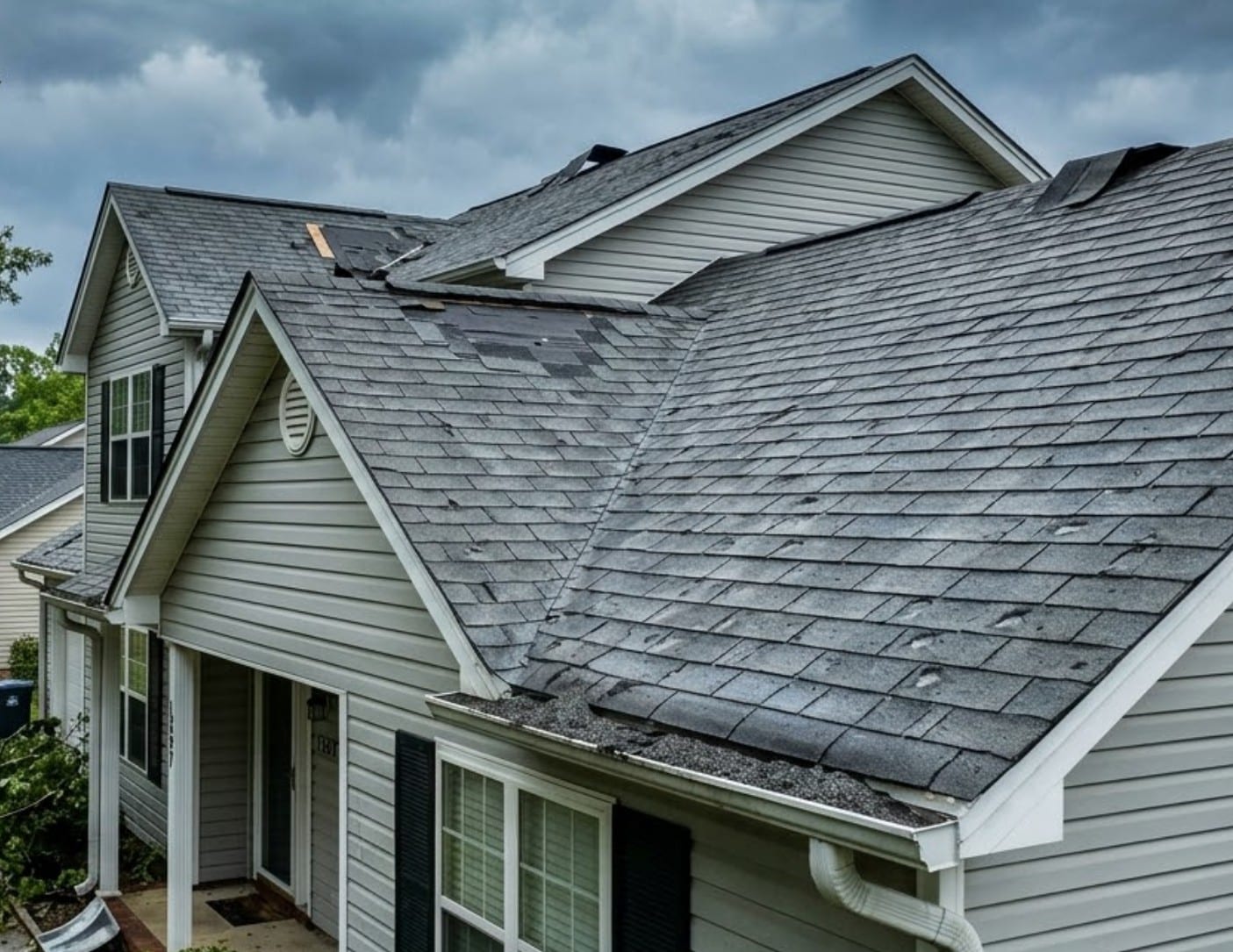

If you live in Middle Georgia, you are no stranger to the sudden, violent shifts in our local weather patterns. One moment, the sun is beating down on your property in Macon, and the next, the sky darkens, bringing high-velocity winds, heavy downpours, and damaging hail straight through Warner Robins and the surrounding areas. While we often focus on securing our patio furniture and staying indoors during a severe weather alert, we rarely think about the first line of defense taking the brunt of the abuse: our roof.
Your roof is a complex, meticulously engineered system designed to protect your most valuable asset. However, when a severe Middle Georgia thunderstorm rolls through, that system is put to the ultimate test. Understanding what happens to your roof during a storm, how to spot the hidden signs of damage, and knowing exactly what steps to take in the aftermath can save you thousands of dollars in secondary repairs and secure your home’s structural integrity for years to come.
The Hidden Impact of Middle Georgia Storms
When a storm passes, the most obvious signs of destruction are easy to spot: a downed tree limb in the front yard, scattered leaves, or a knocked-over trash can. But roof damage is notoriously deceptive. Many homeowners walk out to their driveways, look up at their roof, and assume that because there are no gaping holes or entirely missing sections of shingles, their home escaped unscathed. This is a dangerous misconception.
Wind Damage and the Thermal Seal Modern asphalt shingles are manufactured with a specialized sealant strip. When installed correctly and heated by the Georgia sun, this strip bonds the shingles together, creating a watertight, wind-resistant barrier. However, when severe straight-line winds—common in Macon and Warner Robins thunderstorms—hit your home, they create a vacuum effect called wind uplift.
This uplift pulls at the edges of your shingles. Even if the wind isn’t strong enough to completely tear the shingle off the roof, it can easily break that crucial thermal seal. Once the seal is broken, the shingle is no longer watertight. Worse, the constant flapping of the unsealed shingle during future winds will eventually cause it to crease and snap off entirely. Unless you are up on the roof physically inspecting the adhesion of the shingles, this broken seal is entirely invisible from the ground.
The Bruising Reality of Hail Hail damage is another silent killer of roofing systems. When hail strikes an asphalt shingle, it doesn’t always crack the fiberglass matting immediately. Instead, it dislodges the protective mineral granules on the surface of the shingle. These granules are essential; they are the only thing protecting the volatile asphalt underneath from the harsh ultraviolet (UV) rays of the sun.
When a hailstorm strips these granules away, it leaves a “bruise” on the shingle. Over the next few months, the intense Georgia sun will bake that exposed asphalt, causing it to dry out, become brittle, and eventually crack. By the time water starts leaking into your living room, the hailstorm that caused the initial damage might be a distant memory.
The First 24 Hours: Your Post-Storm Action Plan
Taking immediate, calculated action in the 24 hours following a severe storm is critical for protecting your home and setting the stage for a successful insurance claim.
1. Secure the Interior Before you even step outside, walk through the interior of your home. Check the ceilings in every room, especially on the top floor, for bubbling paint, brown water stains, or dripping water. If it is safe to do so, pop your head into the attic with a flashlight. Look for damp insulation, water running down the rafters, or any daylight shining through the roof decking. If you spot active water intrusion, you need emergency tarping immediately to prevent drywall collapse and mold growth.
2. Conduct a Ground-Level Exterior Sweep Walk the perimeter of your home, keeping a safe distance from any downed power lines or precarious branches. Look for shingle tabs, metal flashing, or pieces of fascia board in your yard or bushes. Inspect your downspouts; a heavy accumulation of shingle granules washing out of your gutters is a prime indicator of severe hail damage or advanced aging accelerated by the storm.
3. Document Everything Use your smartphone to take clear, well-lit photos and videos of any debris in your yard, granular loss at the downspouts, and any visible damage to your siding, gutters, or windows. Insurance companies look at the entire exterior profile of the home when assessing a storm date. If your window screens are torn and your gutters are dented, it helps validate the severity of the storm that hit your roof.
Why You Should Never Perform a DIY Roof Inspection
It is incredibly tempting to grab a ladder from the garage and climb up onto the roof to take a look yourself. Do not do this. First and foremost, safety is a massive concern. A roof that has just been battered by a storm may have compromised decking, slippery residue, or loose materials that can easily lead to a catastrophic fall.
Secondly, an untrained eye simply does not know what to look for. You might spot a missing shingle, but you will likely miss the hairline cracks in the pipe boot boots, the compromised step flashing around the chimney, or the soft “bruises” left by hail. Finally, getting on your roof and attempting makeshift repairs can inadvertently void your manufacturer’s warranty and complicate your homeowners’ insurance claim. Adjusters need to see the damage exactly as the storm left it.
The Cornerstone Advantage: Local Expertise You Can Trust
When widespread storms hit Middle Georgia, our area is often flooded with “storm chasers”—out-of-state roofing companies that temporarily set up shop, aggressively knock on doors, and then vanish as soon as the work dries up, taking your workmanship warranties with them.
You need a local partner who understands the specific climate challenges of the Macon and Warner Robins corridor. Cornerstone Roofing and Restoration is firmly rooted right here in Middle Georgia. We know the building codes, we know the local insurance adjusters, and most importantly, we will be here years down the road to stand behind our work.
If a storm has recently passed through your neighborhood, do not wait for a leak to reveal the hidden damage. Preventive care is the most cost-effective home maintenance strategy available. Our certified professionals use advanced techniques and extensive training to identify even the most subtle signs of wind and hail damage, ensuring nothing is missed.
We offer comprehensive, no-obligation roof inspections to give you complete peace of mind. We will thoroughly document our findings, walk you through the condition of your roof, and if necessary, help you navigate the often-confusing insurance claims process from start to finish.
Protect your home, your family, and your investment. Don’t let the hidden damage of yesterday’s storm become tomorrow’s costly disaster.
Contact Cornerstone Roofing and Restoration Today
- Website: cornerstoneroofingrestoration.com
- Phone: +1 (478) 508-8628
- Email: cornerstoneroofing.office@gmail.com
- Office Address: 1307 Ball Street STE 1, Perry, GA 31069