

Middle Georgia is a beautiful place to live, but we are located in a volatile weather region often referred to as “Dixie Alley.” Unlike the famous Tornado Alley in the plains, our tornadoes and straight-line wind events often come at night, are wrapped in rain, and occur throughout the year, not just in spring.
When severe weather strikes Perry, Warner Robins, or Fort Valley, your roof is your home’s primary line of defense. If the roof goes, the structural integrity of the rest of the house is compromised. This is why Wind Uplift Resistance is the most critical factor we consider during a roofing installation.
How Wind Uplift Works (The Science)
Wind doesn’t just push down on your roof; it actually pulls it up. It acts like an airplane wing. As wind moves rapidly over the slope of your roof, it creates an area of low pressure (suction) on top (the Bernoulli principle). Meanwhile, the air pressure inside your attic remains high.
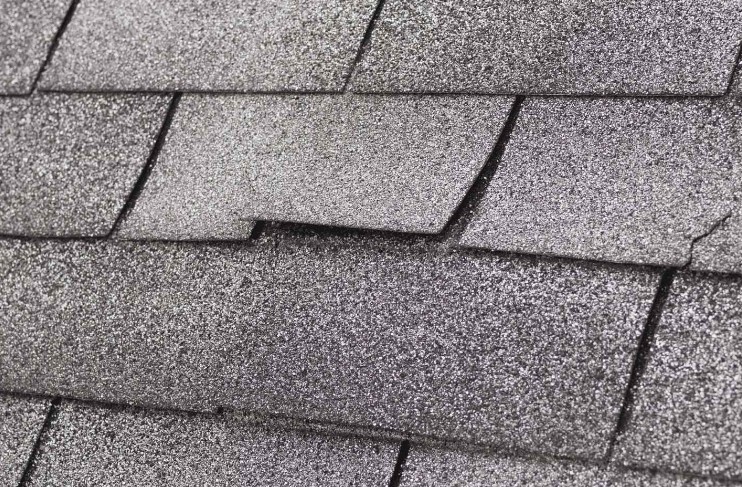
This pressure differential creates a massive lifting force. It tries to lift your shingles—and even your plywood roof deck—straight up off the house. The weakest points are always the edges (perimeter) and the ridge. If the wind can get a fingerhold under one shingle at the edge, it can trigger the “Zippering Effect.” This is where one shingle fails, exposing the underside of the next row to the wind, causing an entire section of the roof to peel back like the lid of a sardine can.
The Cornerstone Standard: 6-Nail Installation
Many local building codes only require 4 nails per shingle. That is the minimum standard to pass inspection. At Cornerstone Roofing and Restoration, we don’t build to the minimum; we build for the storm. We utilize a strict 6-Nail Pattern for our installations.
Why 4 Nails Isn’t Enough
With a standard 4-nail pattern, the shingle is held in place, but the corners are often left vulnerable to flexing. In a 70 mph gust, that shingle can flutter. Constant fluttering weakens the mat until it tears.
The 6-Nail Advantage
- The Technique: We place 6 nails in the correct “nailing zone” of every single shingle. This significantly reduces the distance between fasteners.
- The Result: This effectively increases the holding power of the shingle by 50% and reduces the ability of the wind to get underneath the shingle.
- The Warranty: By using this installation method, combined with proper starter strips at the eaves and rakes, we can offer wind warranties of up to 130 mph on select Atlas roofing systems. That is equivalent to a Category 3 Hurricane.
The “High Nailing” Mistake
One of the most common reasons roofs fail in Middle Georgia isn’t the material—it’s the installer. A common error is “High Nailing.” Every shingle has a specific nail line (usually a reinforced strip). If a roofer is rushing or using a nail gun carelessly, they might drive the nail too high, missing this strip entirely.
If you high-nail a shingle, you have essentially hung a picture frame on the wall without hitting the stud. The first strong wind will rip the shingle right through the nail head. At Cornerstone, we train our crews to hit the line every time.
The Importance of the Starter Strip and Hip Caps
The Starter Strip
The first row of shingles on your roof is called the “Starter Strip.” It is the most important row on the entire house because it seals the edge where the wind hits first. Lazy or inexperienced roofers sometimes just turn a regular shingle upside down and use that as a starter. We never do that. That method leaves the edge vulnerable because the seal doesn’t align properly. We use a dedicated, high-adhesive starter strip designed specifically to lock down the perimeter of your roof against updrafts.
Hip and Ridge Caps
The very peak of your roof (the ridge) takes the brunt of the wind load. Standard 3-tab shingles are often cut up and used as ridge caps to save money. These are flimsy and often the first things to blow off. We install High-Profile Hip and Ridge Shingles that are thicker, pre-bent, and formulated with stronger adhesive to stay put when the wind howls.
Is Your Roof Ready?
If your roof was installed more than 10 years ago, or if it was installed by a “budget” roofer who might have cut corners on nailing patterns, you could be at risk during the next severe thunderstorm warning.
Don’t wait for the siren to wail to wonder about your roof. Contact Cornerstone to inspect your roof’s wind resistance today. We can check the seal on your existing shingles, look for high-nailing issues, and ensure your family is safe for the coming season.