
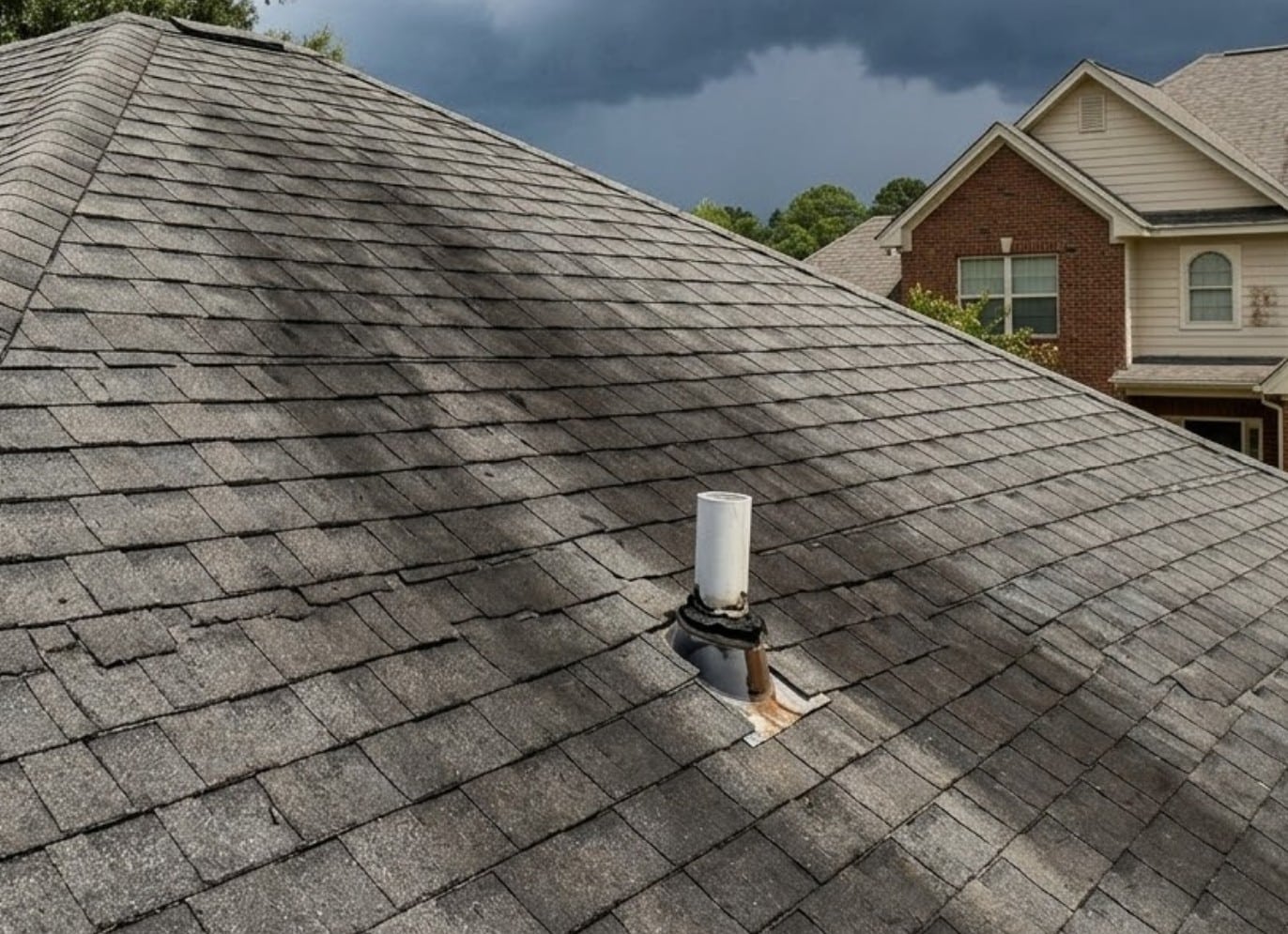

When you purchase a new roof or buy a home in Macon or Warner Robins, you will often hear the term “30-year architectural shingle.” For many homeowners, this phrase provides a deep sense of security. It’s easy to assume that a 30-year shingle means you won’t have to think about your roof again for three decades. Unfortunately, in the roofing industry, the term “30-year” is more of a class of shingle than a guarantee of lifespan, especially when you factor in the brutal realities of the Middle Georgia climate.
At Cornerstone Roofing and Restoration, we often have to break the hard news to homeowners that a 10-year-old roof in Bibb or Houston County is not “practically new”—it is solidly middle-aged. The unique combination of extreme heat, rapid temperature swings, and relentless humidity means that roofs in our area age significantly faster than they do in milder climates. Understanding what happens to your roofing materials at the 10-year milestone is crucial for preventing unexpected leaks and maximizing the return on your investment.
The Myth of the 30-Year Shingle in the South
To understand why a 10-year-old roof needs attention, you have to understand how asphalt shingles are manufactured. A modern architectural shingle is composed of a fiberglass mat coated in liquid asphalt and topped with protective mineral granules. The asphalt provides the waterproofing, and the granules protect the asphalt from the sun.
In a perfectly temperate laboratory setting, that combination might last 30 years. But your home in Warner Robins is not a laboratory. It is on the front lines of a harsh, humid, subtropical climate. By the time a roof here celebrates its 10th birthday, it has survived approximately 3,650 days of intense UV exposure, over 400 severe thunderstorms, and countless hours of suffocating humidity. This environment dramatically accelerates the chemical breakdown of the roofing materials.
The Baking Effect: Ultraviolet Degradation
The most relentless enemy of your roof is the Georgia sun. During the peak of summer in Macon, the ambient air temperature might be 95°F, but the surface temperature of your dark asphalt shingles can easily exceed 150°F.
This extreme heat causes “The Baking Effect.” The essential oils and chemical plasticizers inside the asphalt begin to literally cook out of the shingle. As these oils evaporate over the years, the shingle loses its flexibility and pliability. It becomes dry, rigid, and brittle.
As the shingle dries out, it also loses its grip on the protective mineral granules. Once those granules start washing down your downspouts and into your gutters, the asphalt is directly exposed to UV radiation, which accelerates the deterioration even further. By year 10, a significant percentage of roofs in Middle Georgia have begun to show early signs of this widespread granule loss and brittleness.
Thermal Shock: The Middle Georgia Rollercoaster
Heat is bad, but rapid temperature changes are worse. A common weather pattern in Warner Robins is a sweltering, 100-degree July afternoon followed by a sudden, violent pop-up thunderstorm that drops the temperature by 25 degrees in a matter of minutes.
When materials get hot, they expand. When they cool rapidly, they contract. This continuous cycle of rapid expansion and contraction is known as “Thermal Shock.”
Thermal shock places an immense physical strain on your entire roofing system. The shingles pull against the nails securing them to the decking. The constant movement can break the thermal sealant strip that glues the shingles together, leaving them susceptible to wind uplift. It also causes micro-tears in the fiberglass matting. By the time your roof is 10 years old, it has endured thousands of these micro-movements, slowly compromising the structural integrity of the field shingles.
The Silent Killer: Humidity and Biological Growth
If the sun and temperature swings weren’t enough, the heavy humidity of Middle Georgia presents its own set of challenges. If you drive through older neighborhoods in Macon, you will likely notice roofs with large, dark, black streaks running down the slopes. Many homeowners mistake this for dirt or soot, but it is actually Gloeocapsa magma, a type of airborne blue-green algae.
This algae thrives in the hot, humid environments of Houston and Bibb counties. It feeds on the crushed limestone used as a filler in modern asphalt shingles. Over the course of 10 years, this biological growth doesn’t just look unsightly; it is actively eating away at the protective layers of your roof, further exposing the volatile asphalt underneath. Furthermore, the persistent humidity means that any moisture trapped in your attic space or under your shingles takes much longer to dry out, increasing the risk of wood rot on your roof decking.
What Fails First at the 10-Year Mark?
While your asphalt shingles are fighting the sun and the rain, other components of your roof are degrading even faster. When we inspect a 10-year-old roof at Cornerstone Roofing and Restoration, the field shingles usually aren’t the primary source of active leaks. The weak points are the penetrations and the sealants.
Plumbing Pipe Boots The rubber collars (boots) that seal the PVC plumbing vents protruding from your roof are notorious for failing in the Georgia sun. UV rays dry the rubber out, causing it to crack and split. This almost always happens around the 8 to 10-year mark. Once that rubber cracks, rainwater runs directly down the pipe and into your drywall or attic insulation.
Caulk and Sealants The industrial caulk used around chimney flashing, skylights, and satellite dish mounts is not permanent. After a decade of thermal shock and UV exposure, these sealants crack, shrink, and pull away from the metal, leaving a direct path for water intrusion.
The Importance of a Decade Inspection
If your roof in Macon or Warner Robins is approaching or has passed the 10-year mark, it is entering a highly vulnerable phase. Treating a 10-year-old roof like a brand-new roof is a recipe for interior water damage.
This is the exact time when proactive maintenance pays off the most. A professional inspection by Cornerstone Roofing and Restoration can identify brittle shingles, replace dried-out pipe boots, and reseal crucial flashing before a leak ever occurs. By addressing the components that fail first, you can effectively extend the life of your existing roofing system, delaying the need for a costly full replacement.
Don’t let the Georgia weather quietly dismantle your home’s primary defense. A roof that has protected you for a decade deserves a professional checkup.
Contact Cornerstone Roofing and Restoration Today
- Website: cornerstoneroofingrestoration.com
- Phone: +1 (478) 508-8628
- Email: cornerstoneroofing.office@gmail.com
- Office Address: 1307 Ball Street STE 1, Perry, GA 31069