

The day after a severe storm rolls through Houston County, it happens like clockwork: trucks appear in your neighborhood, and salespeople start knocking on doors telling you that your roof is “destroyed.”
It can be confusing and scary for a homeowner. How do you know if you actually have storm damage that insurance will cover, or if your roof is just old and suffering from normal wear and tear? This distinction is critical because it determines whether you pay a deductible or the full price of a roof.
At Cornerstone Roofing and Restoration, we believe in honest, transparent education. We want you to know exactly what we look for when we get up on your ladder.
Identifying Wind Damage (Insurable)
Wind damage is very specific. It’s not just “loose shingles” or “it looks messy.” True wind damage that insurance adjusters look for has distinct characteristics:
- The Crease: When high winds (60+ mph) hit your roof, they can lift the shingles up. If the wind bends the shingle back far enough, it snaps the fiberglass mat underneath. When the shingle lays back down, it leaves a dark, horizontal black line across the top of the shingle about an inch below the shingle above it. This is called a “wind crease.” It means the seal is broken and the shingle is physically damaged.
- The Missing Shingle: Obviously, if shingles are lying in your front yard or you see bare wood on your roof, that is wind damage. This is an immediate emergency as your decking is exposed to rain.
- Broken Seals: Sometimes the shingle looks fine from the street, but the sealant strip has been ripped loose. We check for this by gently testing if the shingles are unsealed at the edges. If they flap easily in the breeze, they will eventually blow off.
Identifying Hail Damage (Insurable)
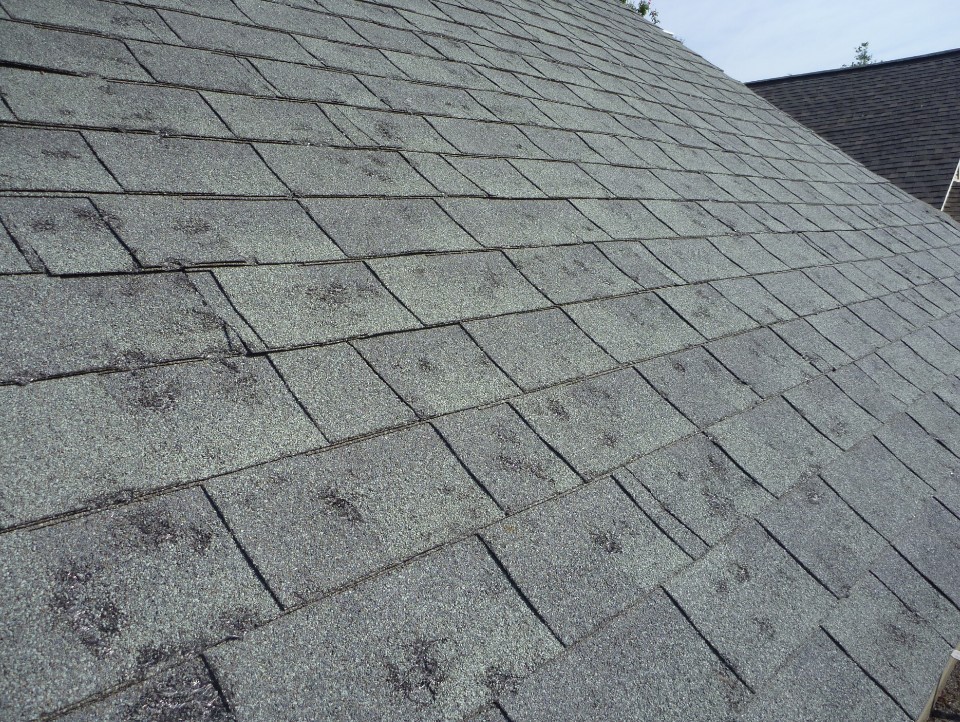
Hail damage in Georgia looks different than the massive holes you might see on the news in the Midwest. Here, it is often more subtle but just as damaging to the long-term life of the roof.
- The Bruise: We look for dark, circular spots where the granules have been knocked off, exposing the black asphalt underneath.
- Soft Spots: When we press on these spots with our thumb, they feel soft—like a bruised apple. This means the integrity of the shingle is gone. The sun will burn a hole through that spot within a year, leading to leaks.
- Collateral Damage: We also look for dents on your gutters, downspouts, and window screens. If the soft metal on your house is dented, it’s highly likely your roof took a beating too.
Identifying Age & Wear (Maintenance)
This is where many homeowners get confused. Insurance policies generally do not cover normal aging or maintenance issues. If a roofer tells you to file a claim for these, your claim will likely be denied.
- Blistering: Small bubbles popping up on the shingle surface. This is usually caused by poor ventilation and excessive attic heat, not storms.
- Granule Loss: If your roof looks “bald” or shiny, or if your gutters are full of sand after a rain, that is simply age. The shingles are shedding their protective layer.
- Thermal Splitting: Vertical cracks in the shingles caused by the expansion and contraction from hot days and cool nights.
Why You Need a Professional Assessment Before Filing
Filing a claim is a significant event. If you file an insurance claim for “Age,” it will be denied, but it still goes on your record as a claim filed (a “zero-pay claim”). This can still affect your premiums or your ability to switch insurance carriers.
That is why you should call Cornerstone Roofing and Restoration before you call your insurance adjuster. We will perform a free, digital inspection with photos. We will tell you the truth: “Yes, this is valid storm damage,” or “No, this is just an old roof that needs replacement.” We help you make the right financial decision for your home.